
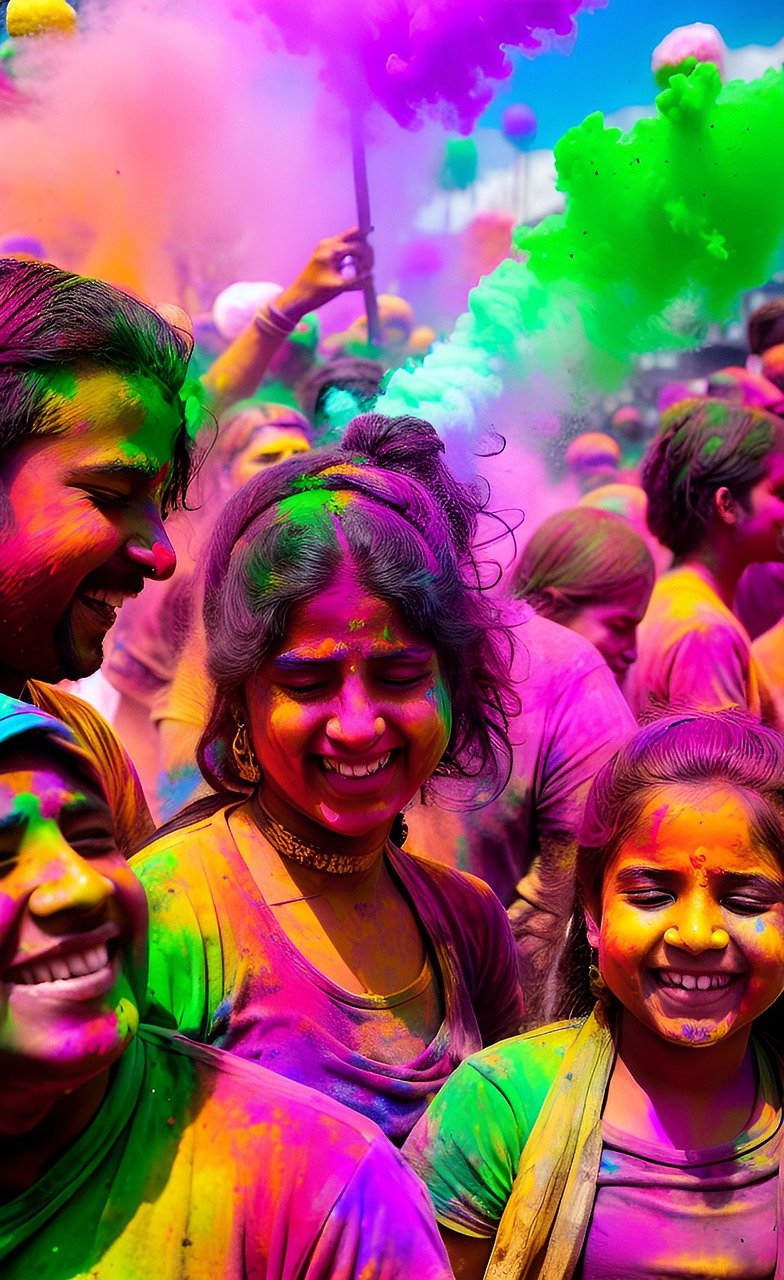
Holi Festival: The Vibrant Colors of Joy, Unity, and Renewal in Nepal and Beyond
Introduction to Holi Festival: A Kaleidoscopic Celebration of Spring, Joy, and Renewal
When the air begins to lose its winter chill and nature dons vibrant colors, it signals the arrival of one of the most joyous Hindu festivals—Holi. Commonly referred to as the "Festival of Colors," Holi represents an exuberant celebration of renewal, unity, love, and the victory of good over evil. Rich in tradition, overflowing with color, and brimming with cultural significance, this festival transcends geographical boundaries, captivating the hearts of millions around the globe.
Celebrated after the full moon in the Hindu calendar month of Phalguna—typically between late February and early March—Holi is not merely a festival but a sensory and emotional experience. The festivities mark the symbolic transition from the chilling darkness of winter to the vibrant warmth of spring, echoing nature’s cycle of rebirth.
The Essence of Holi: A Colorful Symphony of Joy
At its core, Holi is a deeply symbolic festival, embodying unity, love, forgiveness, and rejuvenation. Communities come alive, as differences of caste, age, status, and even past grievances momentarily dissolve amidst vibrant explosions of color. Streets buzz with laughter, songs, dance, and playful interactions, bringing people from every walk of life together under a brilliant tapestry of powdered pigments.
Holi in Brief: Origins and Historical Roots
Though widely regarded as a cheerful celebration of color, Holi is deeply rooted in ancient Hindu mythology. The festival’s name, "Holi," is believed to originate from "Holika," the demoness sister of King Hiranyakashipu. The king, intoxicated by power, sought to be worshipped as a god himself. His son, Prahlad, defied him, remaining devoted to Lord Vishnu. To punish Prahlad's steadfast devotion, Holika was tasked to lure Prahlad into a fire due to her supposed immunity to flames. Miraculously, Prahlad emerged unscathed, protected by his unwavering devotion, while Holika perished. This mythological tale vividly symbolizes the triumph of righteousness and devotion over malice and arrogance, forming the philosophical bedrock of the festival.
Why Holi Captivates People Across Cultures
Unlike many other cultural or religious festivities, Holi provides a unique blend of relaxation and exuberance, free from rigid rituals or religious obligations. People of all ages and backgrounds come together to break barriers of caste, creed, and class. Social norms are temporarily relaxed, fostering a communal atmosphere filled with playful mischief, vibrant chaos, and mutual goodwill. The phrase often heard during Holi, "Bura na mano, Holi hai," literally translates to "Don't take offense, it's Holi," encapsulating the carefree and joyous spirit of the festival.
Tourists and locals alike participate enthusiastically, smearing vivid colored powders (gulal) on one another, joyously throwing water balloons, and joining vibrant musical processions. The spontaneous interactions and cheerful camaraderie during Holi create memories and bonds that linger long after the colors wash away.
Experiencing Holi with Nepal Yetiraj Treks
For travelers seeking an authentic experience, celebrating Holi in Nepal offers a unique blend of tradition and exuberance. Nepal Yetiraj Treks, with its deep roots in the local culture, offers travelers exclusive opportunities to immerse themselves in authentic Holi festivities across Nepal. Whether in the historical streets of Kathmandu, the picturesque lakeside town of Pokhara, or rural villages nestled in the Himalayas, participating in Holi celebrations through Nepal Yetiraj Treks ensures visitors gain firsthand experience of Nepali culture and hospitality at its finest.
II. Historical Origins and Mythological Significance of Holi
Ancient Origins: Celebrating the Arrival of Spring
Holi's roots extend deep into ancient history, marking it as one of the oldest continuously celebrated festivals in human civilization. Historically, Holi began as an agricultural festival, symbolizing the shift from the dark and barren months of winter to the vibrant revival of life during spring. Celebrated predominantly in farming communities, the festival originally represented the hope and abundance that came with new harvests. Farmers across the Indian subcontinent celebrated Holi with enthusiasm, performing rituals intended to foster prosperity and abundant harvests in the upcoming agricultural season.
In traditional Hindu calendars, Holi falls on the full moon (Purnima) of the month known as Phalguna, typically between late February and mid-March. This timing holds symbolic significance, aligning with the spring equinox, signifying balance and renewal in nature itself.
The Legend of Prahlad and Holika: Victory of Devotion and Goodness
The vibrant festival of Holi is profoundly tied to a compelling legend that resonates through generations, symbolizing the victory of virtue over evil. Central to the story is the demon king Hiranyakashipu, a powerful and tyrannical ruler whose immense strength and ego drove him to claim divinity for himself. According to Hindu mythology, Hiranyakashipu had received a divine boon granting him near-invincibility, leading him to arrogance and cruelty. He forbade worship of the gods, insisting he alone be revered by his subjects.
However, his young son, Prahlad, defied him. With unwavering devotion to Lord Vishnu, Prahlad’s spiritual resolve infuriated the king. Hiranyakashipu decided to punish his son severely for his defiance and attempted several times to kill Prahlad, all of which failed due to the divine protection the young devotee received from Lord Vishnu.
In desperation, the demon king enlisted his sister, Holika, who possessed immunity from fire, to eliminate Prahlad. Holika deceitfully lured Prahlad onto a blazing pyre, expecting to emerge unscathed due to her protective boon. However, the opposite occurred—Holika’s powers failed due to her malicious intentions, and she perished, while Prahlad emerged unharmed, protected by his unwavering devotion and righteousness. This powerful narrative underscores Holi as a celebration of divine justice and the triumph of righteousness over evil intentions.
The Legend of Krishna and Radha: The Colorful Beginnings
Holi's vibrant celebration of colors finds its delightful origins in another charming legend involving Lord Krishna, one of Hinduism’s most beloved deities, and his beloved companion Radha. The playful tradition of throwing colors is believed to have started with Krishna himself, who was conscious of his darker complexion compared to Radha’s fairer skin. In a playful exchange, Krishna’s mother suggested that he smear colors on Radha’s cheeks to balance their complexions, leading Krishna to playfully follow this advice. This mischievous act sparked a joyful exchange of colors between Krishna, Radha, and their companions, the gopis, evolving into a communal celebration filled with joyous chaos, laughter, and camaraderie.
Today, this legend continues to be celebrated with fervor, especially in regions like Mathura and Vrindavan—Krishna’s birthplace and the region associated most strongly with this beloved deity. Here, the festival is deeply entwined with stories of Krishna's youthful exuberance, underscoring Holi as a festival not only of colors but also of love, playfulness, and community bonding.
Philosophical and Cultural Essence of Holi
Beyond the colors and joyous chaos, Holi serves as a vivid reflection of key Hindu philosophical tenets and cultural values. It epitomizes the freedom from negativity, symbolically represented in the burning of the Holika bonfire—a ritual known as Holika Dahan. On this night, communities ignite massive bonfires, symbolizing the burning away of negativity, past grievances, and misunderstandings, fostering a spirit of renewal and forgiveness among participants. The ashes collected from these bonfires are considered sacred, often smeared as blessings on the foreheads of devotees, reinforcing the spiritual cleansing and rebirth themes of Holi.
Moreover, Holi is uniquely inclusive. It provides an avenue for all people—irrespective of caste, social standing, age, gender, or economic status—to interact freely in a spirit of camaraderie and goodwill. On this day, social barriers dissolve, friendships are renewed, past grievances forgotten, and new alliances often formed. The festival’s motto, “Bura na mano, Holi hai” ("Don't take offense, it's Holi"), encapsulates this atmosphere of tolerance and collective celebration, demonstrating the profound human values at the festival’s heart.
Holi as a Cultural Icon of India and Nepal
While Holi originated in India, its vibrant celebrations have become an integral part of Nepali culture, known locally as Phagu Poornima. In Nepal, Holi festivities are characterized by cultural programs, music concerts, traditional dances, and enthusiastic street celebrations across major cities such as Kathmandu, Pokhara, and in the plains of the Terai region. Over centuries, Holi has evolved from a purely Hindu festival to a broader cultural event enjoyed by diverse communities, locals, and international visitors alike, exemplifying unity in diversity.
In this spirit, Nepal Yetiraj Treks invites visitors to experience this incredible festival firsthand, integrating authentic cultural experiences with the unforgettable natural beauty of Nepal, ensuring travelers partake in celebrations rich in tradition, joy, and vibrant colors.
Conclusion: Celebrating Unity Through Colors
As the vibrant hues of Holi settle and the echoes of laughter fade, the festival leaves behind an indelible mark of joy, renewal, and togetherness. More than just a playful exchange of colors, Holi is a profound symbol of unity, rebirth, and the triumph of good over evil. It is a time when communities come together, boundaries dissolve, and a collective spirit of celebration emerges—transcending social, economic, and cultural divides.
Holi: A Universal Message of Harmony and Renewal
Holi's essence goes beyond Hindu mythology and Indian traditions—it conveys a universal message of hope, forgiveness, and new beginnings. Across the world, people of different backgrounds join in the celebrations, embodying the festival’s spirit of inclusivity and joy. Whether in the bustling streets of Kathmandu, the historical lanes of Vrindavan, or the international Holi festivals in Berlin and New York, the message remains the same: celebration, unity, and renewal.
The festival serves as a reminder that life, much like the colors of Holi, is a blend of emotions, relationships, and shared experiences. The playful throwing of colors is not just an act of joy but a representation of wiping away the past, embracing the present, and welcoming the future with open arms. It is a time to forgive past grievances, strengthen friendships, and start afresh.
Why Experience Holi in Nepal?
Nepal, with its rich cultural heritage and breathtaking landscapes, offers one of the most authentic and exhilarating Holi celebrations outside India. The Phagu Poornima festivities in Nepal combine traditional customs, music, dance, and modern vibrancy, making it an ideal place for both locals and travelers to experience Holi. From the historical Basantapur Durbar Square celebrations in Kathmandu to the lakeside revelry of Pokhara, the festival transforms Nepal into a kaleidoscope of color, music, and joy.
For adventure seekers, experiencing Holi in Nepal is a once-in-a-lifetime opportunity. Combining cultural immersion with scenic Himalayan treks, Nepal Yetiraj Treks offers exclusive Holi trekking tours that allow visitors to celebrate Holi in local villages, witness authentic customs, and explore Nepal’s stunning landscapes.
Join Nepal Yetiraj Treks for an Unforgettable Holi Adventure
At Nepal Yetiraj Treks, we believe that travel is not just about destinations but about experiences that stay with you forever. Our Holi Festival & Trekking Tour Packages are designed to provide a unique blend of adventure and cultural immersion, ensuring that you experience Holi in its most authentic and breathtaking setting.
Why Book a Holi Trekking Tour with Us?
✅ Experience Authentic Holi Celebrations – Join locals in Kathmandu, Pokhara, and rural villages for an immersive Holi experience.
✅ Explore Nepal’s Breathtaking Scenery – Combine Holi with stunning treks through the Himalayas.
✅ Professional Guided Tours – Our expert guides ensure a safe, exciting, and educational experience.
✅ Tailored Experiences – Customize your trip with cultural visits, adventure activities, and treks to match your interests.
Book Your Holi Adventure Today!
Don’t just hear about Holi—experience it! Let Nepal Yetiraj Treks take you on a once-in-a-lifetime journey where culture, adventure, and festivity merge into an unforgettable experience.
📩 Contact Us Today for Special Holi Trekking Packages!
🌍 Explore Our Holi Trekking Tours | 📞 Call Us: +9779803623151 | ✉️ Email: info@yetirajtreks.weedoo.digital